

Medical experts are urging parents, particularly women over 35 or those with a family history of genetic disorders, to seek medical advice during pregnancy. They warn that early detection of conditions such as Down syndrome can make management easier, noting that the care of children with the condition can be costly and demanding.
Contrary to some local misconceptions, Down syndrome is not caused by witchcraft. It is a genetic condition caused by the presence of an extra copy of chromosome 21, known as trisomy 21.
According to global statistics, Down syndrome occurs in approximately 1 in every 1,000 live births, with the risk increasing significantly in women over the age of 35.
In Kanenankumba Village, Hoima City, Mildred Katusabe’s experience illustrates both the challenges and the possibilities of proper medical care.
At 35, Katusabe underwent a 3D ultrasound scan during pregnancy, which revealed a potential heart defect in her unborn child.
After birth, her son, Rowan Angonza Crips, displayed weakness and difficulty feeding. A postnatal test, costing Shs. 700,000, confirmed he had Down syndrome.
“When I went for the scan, the technician noticed a heart issue. I did not want to believe it, but after birth, the baby was very weak,” Katusabe said.
Rowan required surgery to correct a hole in his heart, a common complication associated with Down syndrome.
After fundraising and travelling to India for treatment, doctors initially advised waiting for three months until his heart grew sufficiently for surgery.
Through careful care, including feeding assistance from his mother, Rowan gained strength and underwent a successful operation.
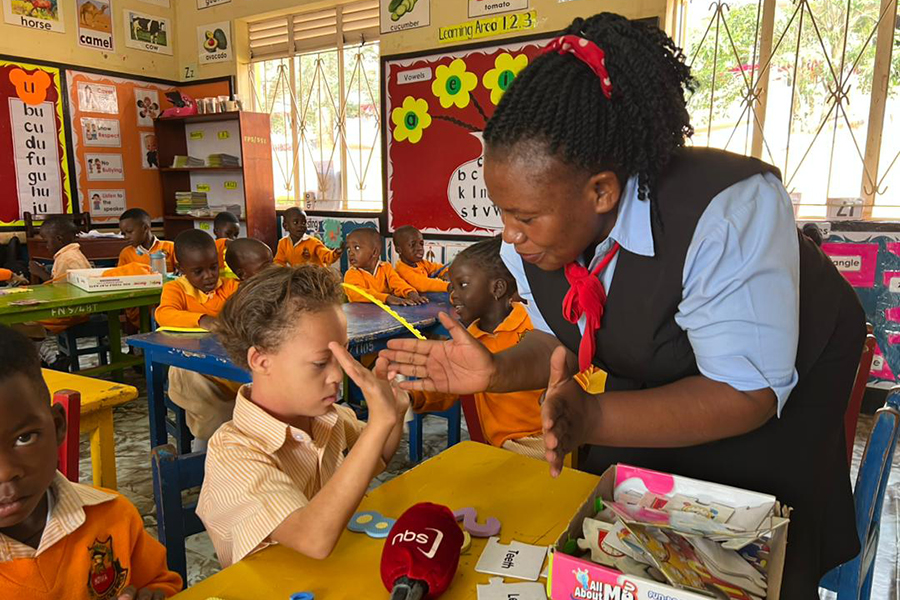
Today, at seven years old, he attends school but continues to face challenges with muscle weakness, a condition often associated with Down syndrome due to hypotonia (low muscle tone).
Rowan’s teachers at Flobetto Nursery and Primary School say he has made gradual progress. “He is embraced like any other child and is learning to be independent. He enjoys puzzles but cannot yet read or write,” they said.
Dr. Mark Kunihira, an expert on Down syndrome at AAR Clinic, says the condition is more common in children born to women over 35.
“Globally, one in every 1,000 children is born with Down syndrome. While age is a risk factor, a family history of the condition can increase the likelihood, and maternal health issues, including diabetes during pregnancy, can also contribute,” he said.
Globally, early detection is standard practice. Prenatal screening and diagnostic tests—such as nuchal translucency scans, non-invasive prenatal testing (NIPT), and amniocentesis—can identify Down syndrome before birth.
While some countries may offer abortion as an option when the condition is detected, Ugandan medics emphasise management and care rather than termination.
In response to her experiences, Katusabe founded the Rowan Down Syndrome Awareness Centre, which now operates across five districts in Bunyoro.
The initiative has registered 130 children and adults with Down syndrome and provides support, awareness, and access to specialized care.
Katusabe appeals to donors and the government to expand support to underserved villages.
“Many parents abandon children with Down syndrome, thinking they are cursed, but with proper care and early intervention, these children can lead fulfilling lives,” Katusabe said.
Medics continue to advise women over 35 to undergo medical checkups and prenatal screening. With proper management, interventions such as cardiac surgery, physiotherapy, and educational support can significantly improve quality of life and independence for children with Down syndrome.
Globally, awareness campaigns, advocacy, and government support are critical. Organizations such as the World Health Organisation and national Down syndrome associations emphasize that early diagnosis, inclusive education, and community support are key to helping affected children reach their full potential.
Katusabe believes that with adequate funding, more children like Rowan can receive treatment, rehabilitation, and support to lead independent lives.
